
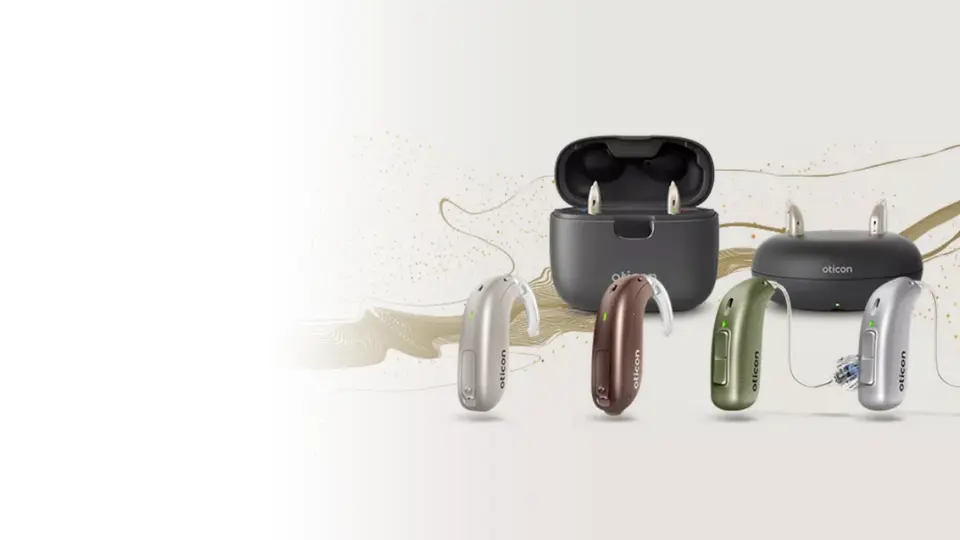
Types of Hearing Aids
With many types of hearing aids available today, finding the right one starts with understanding your options. From discreet in-the-ear styles to powerful behind-the-ear models, each type offers different benefits for your hearing needs, lifestyle and preferences.
Explore the different hearing aid types available at Hearing Partners and find the right fit for you.
Which Type of Hearing Aid Is Right for You?
There are various hearing aid types available, and each comes with its own benefits and trade-offs. Your level of hearing loss, lifestyle, dexterity and personal preferences can all influence which style best suits you. Here is a quick comparison of the main types of hearing aids:
IIC | CIC | NXT in-the-ear | ITC | Half/Full-shell ITE | RITE/RIC | BTE | |
|---|---|---|---|---|---|---|---|
Extent of hearing loss | Mild to moderate | Mild to moderate | Mild to moderate | Mild to moderate | Mild to severe | Mild to severe | Mild to profound |
Discreetness | More discreet | More discreet | More discreet | Less discreet | Less discreet | More discreet | Less discreet |
Battery | Disposable | Disposable | Rechargeable | Disposable | Disposable | Rechargeable & disposable | Rechargeable & disposable |
Bluetooth connectivity | No | No | Yes | Yes | Yes | Yes | Yes |
Ease of handling | Hardest | Hardest | Hardest | Hard | Moderate | Easy | Easiest |
Your hearing care professional can assess your hearing needs and discuss which options are most appropriate for you.
What Are Behind-the-Ear (BTE) Hearing Aids?
BTE hearing aids have a small casing that sits behind your ear. Sound is delivered into the ear through either a thin tube, an earmould or a receiver placed inside the ear canal. These hearing aids come in different sizes and power levels. Their versatility makes them suitable for a wide range of hearing needs, from mild to profound hearing loss.
Suitable for most types of hearing loss
BTE hearing aids are available in different power levels, making them suitable for many degrees of hearing loss. More powerful BTE models can provide the additional amplification needed for severe to profound hearing loss.
Available in rechargeable styles
Many BTE hearing aids are available with rechargeable batteries. Instead of regularly replacing small disposable batteries, you can place your hearing aids in their charger when they are not in use.
More features and connectivity options
The larger casing of BTE hearing aids provides more room for technology compared to many in-the-ear hearing aids. Depending on the model, features may include Bluetooth connectivity, telecoils and different listening programmes.
Easier handling
Their larger size can make BTE hearing aids easier to hold, insert and adjust. This can be helpful if you have difficulty handling very small devices or controls, or experience eyesight difficulties.
What Are the Types of Behind-the-Ear (BTE) Hearing Aids?
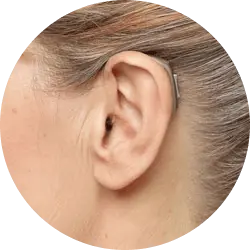
Standard behind-the-ear (BTE)
These hearing aids are available in different sizes and power levels and can support a broad range of hearing loss. They are slightly larger than RITE/RIC hearing aids, so they may be particularly suitable if you need greater amplification or prefer a hearing aid that is easier to handle.
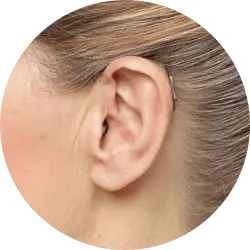
Receiver-in-the-ear (RITE/RIC)
Because the receiver sits inside the ear rather than in the casing, RITE hearing aids are smaller and more discreet than standard BTE models. They are a popular option for people looking for a balance between comfort, discretion and modern hearing technology.
What Are In-the-Ear (ITE) Hearing Aids?
ITE hearing aids are custom-fit hearing aids worn partly or completely inside your ear, rather than behind it. They range from very small devices that sit deep within the ear canal to larger models that fill more of the outer ear. ITE hearing aids are generally more suitable for those with mild to severe hearing loss. The most suitable style will not only depend on your hearing loss, but also factors such as your ear anatomy, dexterity and preferred features.
Discreet design
Some ITE hearing aids sit deep within the ear canal, making them difficult to notice when worn. If discretion is important to you, smaller invisible-in-the-canal (IIC) and completely-in-the-canal (CIC) styles may be worth considering.
Custom fit
Most ITE hearing aids are made using an impression or scan of your ear. This allows the hearing aid to be shaped specifically for your ear for a secure and comfortable fit, and for optimal sound quality.
May offer less amplification
Smaller ITE hearing aids have limited space for larger receivers and batteries. As a result, they may not provide enough amplification for more severe hearing loss. Your hearing care professional can recommend a style based on your hearing test results.
May have fewer feature options
Smaller ITE hearing aids like the IIC or CIC have less room for additional components. As such, they may offer fewer connectivity options, controls or other features than larger hearing aids.
What Are the Types of In-the-Ear (ITE) Hearing Aids?
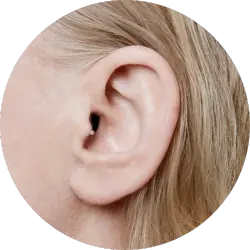
Invisible-in-the-canal (IIC)
Whether IIC hearing aids are suitable for you depends on your hearing needs and ear anatomy. Their small size means they can be more difficult to handle and may have fewer features than larger hearing aids. Additionally, they can be more vulnerable to earwax and moisture buildup.
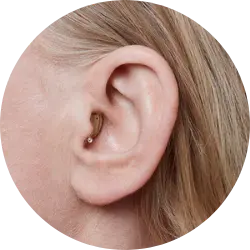
Completely-in-the-canal (CIC)
CIC hearing aids may suit people with mild to moderately severe hearing loss, depending on the device and individual hearing needs. As they are worn inside the ear canal, they can be susceptible to earwax and moisture buildup.
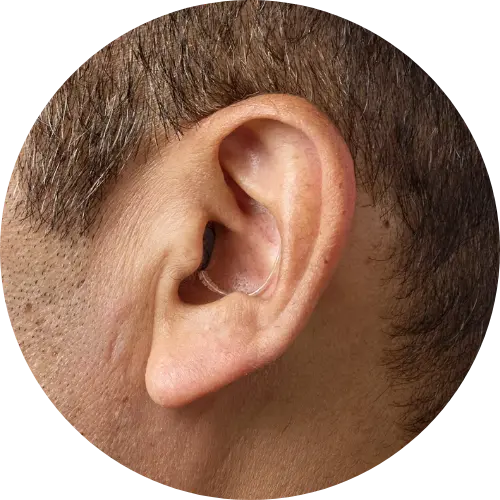
NXT in-the-ear
Despite their compact design, these hearing aids are rechargeable and support various connectivity features. They also feature advanced AI sound processing to help you hear more clearly across different listening environments. Your suitability for this type of hearing aid will depend on your ear structure and hearing needs.
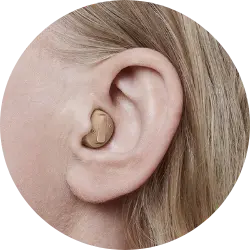
In-the-canal (ITC)
They are larger than IIC and CIC hearing aids, providing more space for controls, batteries and additional technology. Depending on the model, ITC hearing aids can support those with mild to severe hearing loss while still offering a relatively discreet design.
Due to their size, they tend to be easier to insert and remove and may have longer battery life.
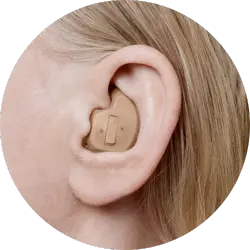
Half-shell/Full-shell
Their larger size allows room for larger controls and additional features, and can make them easier to handle than smaller canal styles. They also tend to have longer battery life than smaller ITE models.
Depending on the model, they can also provide greater amplification for people with more significant hearing loss.
Discover Your Perfect Hearing Aid
Take our quick quiz to find out which hearing aid type would best suit your lifestyle, hearing needs, and preferences. The quiz takes just a few minutes to complete.
*This test is for informational purposes only and does not replace professional advice from our hearing care professionals. Book an appointment for a comprehensive evaluation and personalised recommendations based on your condition, needs and preferences.
Other Types of Hearing Aids
Customer Reviews



FAQs About Hearing Aid Types
BTE styles, including RITE/RIC hearing aids, are widely used because they can accommodate a broad range of hearing needs while offering a balance of technology and discretion.
The right style for you will depend on your hearing loss, lifestyle and preferences. Our hearing care professionals will recommend the most suitable type of hearing aid for your needs. Book an appointment with us today.
BTE hearing aids are commonly recommended for children. They can accommodate a wide range of hearing loss, are relatively easy to handle and allow the earmould to be replaced as a child's ear grows.
ITE hearing aids are generally less suitable for young children because a custom-made casing may need to be replaced frequently as the ear develops.
There is no single hearing aid type that is right for every older adult. BTE, RITE and larger ITE hearing aids may be easier to handle because of their size and accessible controls, particularly for people with reduced dexterity or eyesight difficulties.
However, the most suitable option will still depend on your hearing loss, lifestyle and the features you need. Let our hearing care professionals advise you on the best option for your needs.
Your hearing test results are an important starting point, as certain hearing aid styles are better suited for specific degrees of hearing loss. You may also want to think about:
- How discreet you would like your hearing aids to be
- How comfortable they feel
- Whether you prefer rechargeable or disposable batteries
- Your ability to handle small devices and controls
- Whether you would like Bluetooth or other connectivity features
- The listening environments you encounter in everyday life (e.g. outdoors, noisy social gatherings or quiet settings)
- Your budget
A hearing care professional can help you compare suitable options based on these factors. Book an appointment with us today.
Our hearing aid prices range from RM3,400 to RM19,000 per piece. The cost varies depending on the hearing aid style, technology level, features, and model you choose.
At Hearing Partners, the price covers more than the hearing aid itself. It includes professional fitting and ongoing aftercare to help you get the most from your hearing aids. After your fitting, you can return for unlimited reviews, access remote consultations, benefit from shorter waiting times, and receive warranty coverage for added peace of mind. Book an appointment at your nearest hearing clinic today.
At Hearing Partners, we carry an extensive range of hearing aids from Oticon. Our hearing care professionals can assess your hearing, guide you through the different options and help you find hearing aids that fit your needs, lifestyle and preferences. Visit your nearest hearing clinic and start your journey towards better hearing today!
Schedule a Free Hearing Test
Required fields are marked.